
The American economy collapsed in 2008. That’s not news. Everyone who hasn’t been in a coma for the last ten years heard about it. It has been explained and dissected endlessly. Terry Jones of Monty Python fame is now giving us his Python-like version of what caused the economic meltdown.
The most unusual way that Jones presents his views is through those presenting it. A puppet of legendary economist John Kenneth Galbraith sings of economic theory. Funny animation is everywhere. The primary point is that crashes are part of the normal economic cycle, yet when we are taught economics in school, crashes are taught as aberrations instead of being as natural as booms. I took economics in college, but confess that I don’t remember if this is accurate or not. I am willing to accept the premise, though.
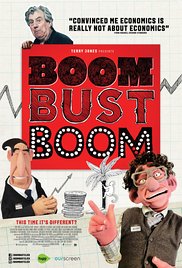
One of the more amusing parts was the description of previous busts in history, beginning with the 17th century tulip bubble burst. It was during the Dutch Golden Age, when tulips were first introduced outside of Holland. Prices of the tulips soared and then suddenly collapsed. Then, of course, there was the great crash of 1929. In 2008, it was the subprime mortgage collapse. If booms can exist, why are we still surprised by busts?
“Boom Bust Boom” is light fun despite the subject matter being anything but. It’s lightly informative and pleasant enough, but all of the talking heads, even the animated ones, eventually blend together into something that you just know won’t make a difference, and that’s more depressing than the heavy message behind the jovial theatrics.
Leave a Reply